Let’s build the picture together!
What does the ‘shrinking space’ for Hungary’s civic sector actually mean on the ground? To find out, we spoke directly with colleagues working on the front lines and listened to their lived experiences. Their accounts revealed recurring fault lines as well as new challenges deliberately brought about by successive Orbán-governments. At the same time, while piecing together this picture, we were reminded of the enduring positive power of human connection.
In November 2024, within the space of two hours, I listened to two people I have known for a quarter century. The first was a soft-spoken woman from the countryside who, in the 1990s, founded a community development association that grew into a respected and prominent regional and then national organization. In the mid-2010s the tide turned: funding vanished, and local partners vanished. The reason was bluntly simple: the association was not loyal enough to the ruling political power. Nearly in tears, she ended by saying that the association—the work of her lifetime—was being wound up and all its buildings sold.
I was still reeling from this when another presenter shared his experiences. He runs a Budapest-based NGO that has learned to navigate the shrinking space. Strategic clarity, better access to foreign funding, the capital’s conducive ecosystem for civic activity, and a strict refusal to take political sides have allowed the organisation to survive and even thrive. He spoke with quiet pride and steady confidence about the difference they still manage to make in people’s lives.
The two organisations operate in the same country, less then 60 kilometres apart. Which story better reflects the fate of Hungary’s civic sector over the past fifteen years?
No one can answer with certainty. Systematic research into Hungary’s civil sector has been deliberately dismantled, official statistics are manipulated and falsified, meetings and conferences are starved of funds or put on blacklists, and government-backed pseudo-NGOs flood the public sphere with disinformation about civil society organizations. In this fog, almost no one has a reliable map of the terrain.
So three of us–Aranka Molnár and István Kosztolányi, and I—set out to piece together the picture from the experiences and insights of those who are actually working in the sector.
A series of in-depth conversations
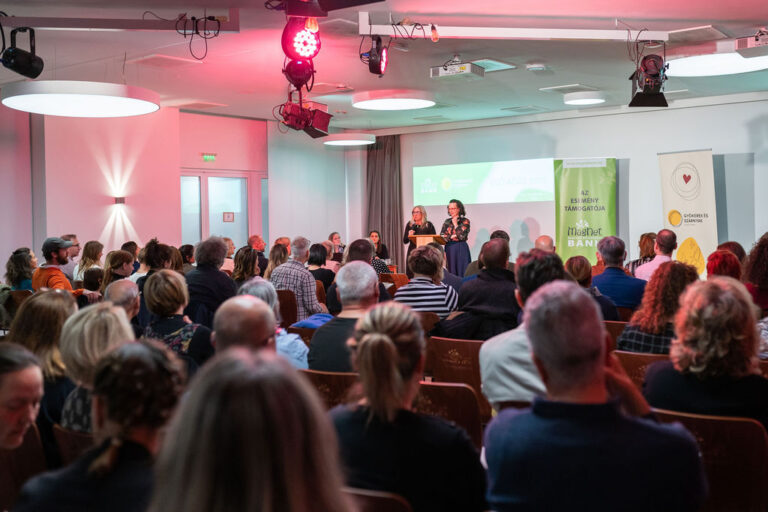
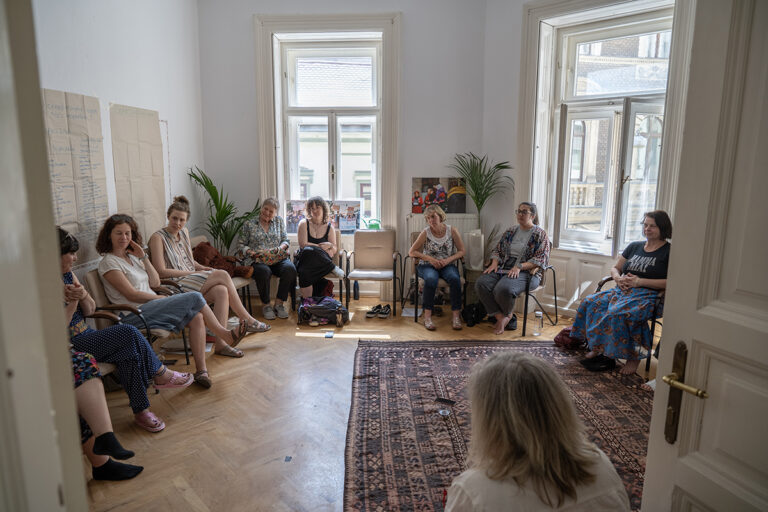
Between September 2024 and now, we have held seven half-day meetings with seasoned colleagues—people with at least fifteen or twenty years in the sector, capable of seeing their own story inside the larger one.
We deliberately mixed Budapest and non-capital voices, grant-makers and grassroots groups, large and small. We asked each participant to describe the changes they had lived through, what had been lost forever, and what new seeds, however small, might still grow into something hopeful.
Thirteen presentations and tens of hours of conversation later, a clearer—if painful—picture has emerged.
Deepening fault lines, new distortions
We found that the Hungarian NGO sector is splintering: the fault lines between NGOs are becoming deeper; those that are still working are operating in very different contexts; they do not understand each other’s circumstances and, what’s more, find it difficult to relate to each other.
Two familiar faultlines have returned to Hungary with a vengeance:
- Budapest versus the rest of the country. Over the past 15 years, the differences between Budapest-based and organisations outside the capital working on local issues have (once again) increased significantly. Organisations in the capital enjoy significantly better funding, networks, and political breathing room with independence from party politics. Outside Budapest, organisations have become increasingly vulnerable to the authorities and local society. Fewer and fewer local businesses, municipalities, or citizens dare support them openly; the risks are too high. These organisations can only count on national resources and these are almost never long-term. Therefore, they have no paid staff who can sustain work. The result: a dramatic collapse in active organisations beyond the capital.
- Foreign-funded versus domestically funded NGOs. The size, predictability and flexibility of foreign funding stands in sharp contrast to the characteristics of domestic funding. NGOs accessing foreign funds have completely different development opportunities than those that only access funding from Hungary. The former have grown in size and complexity over the past fifteen years. The latter—by far the larger group—have seen paid staff vanish and struggle even to find reliable volunteers. They are unable to perform the same quantity, quality and complexity of work as before, and are clearly in decline. The gap is no longer a difference of degree; it is a difference of species.
Entirely new phenomena also surfaced—developments unknown before 2010 whose long-term effects are still barely discussed. Their depth and complexity are unclear and hardly debated. Here are three of them:
- Disappearing ambitions. The proportion of civil society organisations believing that they can bring about systemic change in their immediate or wider environment is decreasing. The vast majority of NGOs have given up on this ambition altogether, and focus on addressing specific issues. They are abandoning the driving force that was the greatest engine of the sector’s development in the 1990s. This puts the sector in a very different place in relation to power and societal development.
- The rise of regime-loyal “civil” organisations. A parallel NGO universe has been built with generous state support over the last 15 years, with the task of spreading the ideology of the Orbán-government beyond the realm of classical party politics. They are visible to the public, and try to combine their political tasks with working as non-governmental bodies for the public good. No one knows how numerous they are, how much real good (or harm) they do, or whether they will outlive the current regime. The “independent” sector has no shared strategy for dealing with them.
- The volunteer-only NGO. A growing number of NGOs now function almost entirely on unpaid labour due to lack of resources. Many of them do wonderful work, but they have very different opportunities and development needs than organisations with permanent paid staff. Providing them with the right type of support has been one of the greatest challenges for the sector, since most financial and capacity building support available assumes at least one paid staff member. One telling example: even organising an hour-long online meeting is a logistical challenge when volunteers normally can only do after work hours.
Taken together, these trends paint a picture of a civic sector that is in survival mode, focused more on defence from government’s attacks than on development. Any serious attempt to rebuild would require a radical departure from current attitudes and strategies.
The unexpected gift
We expected to hear painful stories. What we didn’t expect was what the conversations did to us: in sharing them, we gained a much more complex picture of each other. In these discussions, we didn’t see ourselves as development experts or organisational leaders whom only met at business meetings and formal gatherings. We started relating to each other as ‘whole’ people whose professional careers are intricately linked to private lives. During our time together, a deep trust and mutual respect developed, so we felt free to be uncertain—to not know or understand—and to share our doubts with each other. We could acknowledge our fragility, reveal our failures, but also talk about successes that no one else noticed, or the realisation of dreams that were important only to us. If we were unable to be empathetic, unable to mourn each other’s losses together and celebrate each other’s successes, then human relationships would continue to deteriorate and the last thread connecting organisations and the entire civic sector could be severed.
The times spent together not only gave a new dimension to our decades-long relationships, but also significantly influenced our assessment of the situation. We saw organisations, and not just people, standing in realities that are drifting apart. It felt important to recognise that success or failure depended not only on the skills of the individual, but also on the trends and fault lines that were straining the sector.
To me this felt like a radical departure from how we have worked thus far in Hungary and opened the space to move on. It is still fragile, still partial, still painfully aware of how much has already been lost. But it is real. And for now, that is enough to keep me going to search for the new and the emergent that can be the basis of the new.
The author of the article is Tamás Scsaurszki, the former leader of Roots & Wings Foundation.